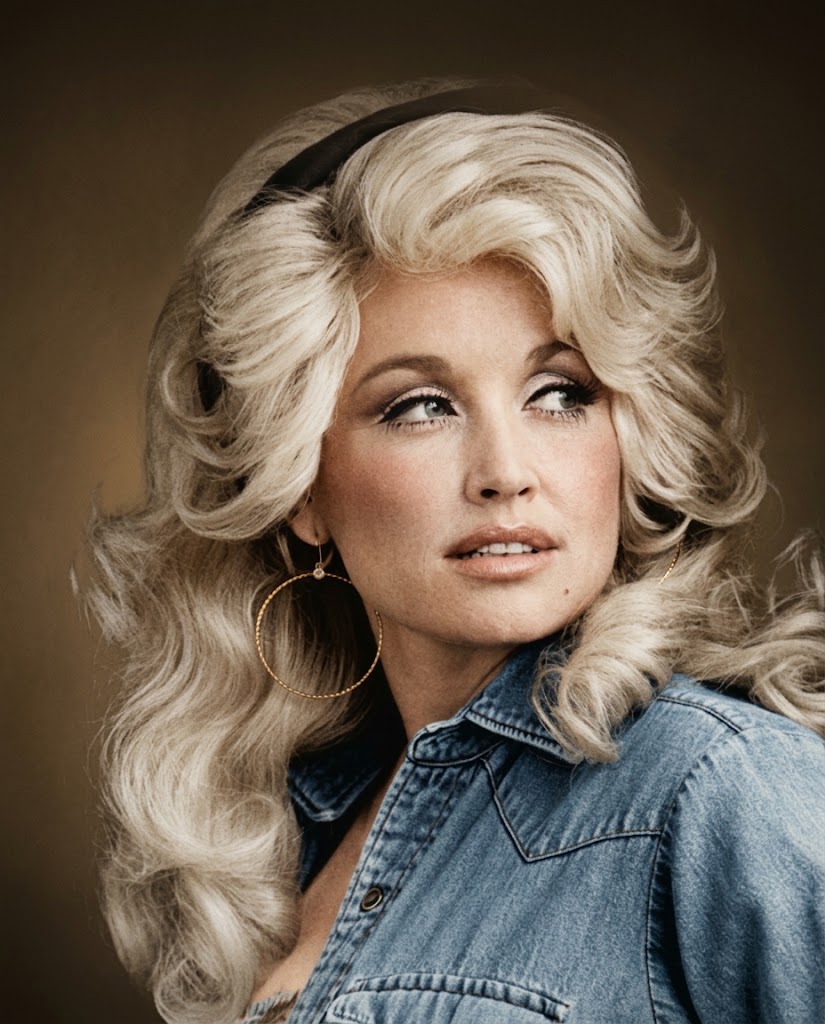
SHE BUILT A GLOBAL EMPIRE ON STORIES FROM THE SMOKY MOUNTAINS — BUT HER FIRST RECORD LABEL TOLD THE TEENAGER SHE WAS NOT ALLOWED TO SING COUNTRY MUSIC.
When Dolly Parton arrived on Music Row in the mid-1960s, she brought a cardboard suitcase full of handwritten lyrics and a voice shaped by the hills of East Tennessee. But the polished Nashville establishment did not immediately see the future of the genre standing in their offices.
In 1965, after months of pitching her music door-to-door, she signed her first major recording contract with Monument Records. She was ready to record the raw, authentic stories she had been writing in secret. However, label founder Fred Foster and his executives made a rigid calculation. They listened to her rapid, high soprano vibrato and concluded it was too thin for traditional country radio. They decided she was a pop singer.
For a young girl trying to survive in a strange city on ketchup soup and hot water, losing a guaranteed recording contract was not an option. Instead of walking away, she quietly compromised.
For nearly two years, the label pushed her into the commercial bubblegum pop market. She was handed upbeat, highly produced tracks like “Happy, Happy Birthday Baby” and “Control Yourself,” songs that completely ignored the depth of her sharp, observant songwriting. She sang the pop melodies, smiled for the promotional photos, and patiently bided her time.
The turning point finally arrived in 1967 with a track called “Dumb Blonde.” Ironically, it was one of the few songs of her early career that she did not write herself, penned instead by Nashville songwriter Curly Putman. When Monument released it, the track bypassed the pop market entirely and found a natural home on country radio, steadily climbing to number 24 on the Billboard country chart.
The title leaned heavily on a superficial stereotype, but the young woman from Sevier County recognized it as her ultimate piece of leverage. She took that chart number straight back to the executives who had previously dismissed her mountain roots. Armed with undeniable proof that country listeners were responding to her voice, she delivered a quiet ultimatum. She demanded the right to record her own country music.
The label finally relented, and the exact studio sessions that followed those negotiations completely redirected her career. Given the green light by Foster, Parton immediately went to work recording the tracks that would become her 1967 debut country album, *Hello, I’m Dolly*. She stepped up to the microphone and cut “Something Fishy,” a traditional country song she had written herself. It quickly outpaced her previous release, peaking at number 17. For the first time, the studio tapes captured the unfiltered, unapologetic country songwriter she had always been.
Those specific sessions provided more than just artistic vindication. The undeniable traditional sound of *Hello, I’m Dolly* drifted across Nashville and caught the attention of television host Porter Wagoner. He was actively searching for a new female singer for his syndicated weekly show. Upon hearing her newly recorded country tracks, he offered her the job, securing the national platform and steady paycheck that would forever cement her foothold in the industry.
She had grown up wearing patched clothes in a two-room cabin, learning early how to patch together a life from whatever was left over. She carried that exact survival instinct into the recording studio. When she was told her voice did not fit the format, she did not rebel blindly. She learned the system, played the game just long enough to get a hit, and then used their own success against them.
The executives thought they were managing a compliant pop singer who would simply follow directions. Instead, she used a song called “Dumb Blonde” to outsmart the entire building, securing the right to sing the mountain stories that would eventually change the world.